Thursday, February 9, 2023

02.09.23 Winner winner chicken dinner...


     Sometimes I get into a run of obsessing over Facebook Marketplace. Usually before I shut my eyes for the night I search to make sure nothing is passing under my radar. The other night I went on and this popped up. A river anchor for the Delaware, which is the exact type I need. You're not going to fish


that river with just any anchor. You'll either never grab bottom or eventually have to donate it to the river bottom because it's locked in and unable to be freed. Before work yesterday I met Bob and made the $45 exchange which came along with a quick lesson. Nice guy and nice anchor. Check.


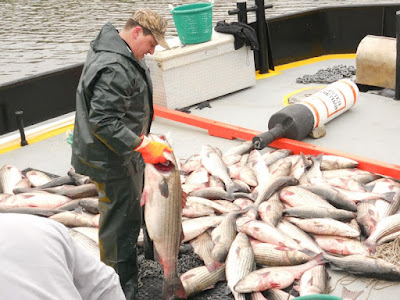
    And in getting ready for the season, and becoming a Gray's Fishtag Research tagger, I needed a new tape measure to take measurements of the fish. I found one on Amazon that came with a straight tape measure and a second that will come in handy meaasuring girth. It was waiting for me when I got home from work. In order to figure out a striped bass' weight you need the length and the girth of the fish. These measurements can be easily taken as the fish floats inside the veiwing tanks. Then you plug the numbers into the following formula you can get a approximate weight of the fish. 


     I need to order my tags soon so I have them for this season, which may or may not be a little earlier start then usual. It's only 19 days until March 1st, and I have my opening day spot picked out. I have already looked at the tides and time of day when I can go so we'll see if planning that out helps. 


     I am learning the advantage of staying put and tying a bunch of the same fly. First, the materials are already accessible and at the ready. There's also some technique muscle memory going on in your mind and fingertips so repetition helps you get better and quicker with each fly tied. I've been using these oddly shaped hooks that Joe gave me a few years back and I like them for these poppers. I think they are large enough and have a good gap space which will allow good hook sets. I'm using the large Flymen Surface Seducer heads and a mix of bucktail, Squimpish, and marabou. I have tied all kinds of 


color combos in the flies this winter, except one. I haven't tied anything in chartreuse over something. It's a color combo most fly anglers swear by. Leif pretty much exclusively ties his Ugly Ass Fly in chartreuse over white, and those colors can be seen in Clouser's, Deciever's, and Bulkhead and Hollow 


Fleyes. I need to find all of my green material, because, as they say, "If it ain't chartruese, it aint no use". But why is that? I found an article from FishTalk Magazine that explains color and how striped bass see the greens in the color spectrum. You can read that article HERE. Below is a chart from that article which discusses fishes in the Chesepeake Bay and how they see at different depths. Now we may not 


be fishing at 174 feet, bottom graph, but it is telling how much green is seen from the top of the water column to way down in the deepest of waters. Maybe that is why the deep trollers using Mojo's and Tony Maja Bunker Spoons choose the big chartreuse colors. It's time for a color change at the vice. 


Wednesday, February 8, 2023

02.08.23 Needed to tie up some topwater.....


     After looking through my flies I realized I better widen my selection of offerings. I took some time to gather up the short cuts I had laying around my table and threw them on a hook for flies in size 1/0 and 2/0. Then I saw I only have a lame selection of poppers. So I went to worka and sadly think I wasted my time on the below fly. It has an articulated shank hanging out the back,


pretty much uncalled for for a fly that goes under 6 inches, but I tried it. When I hold it in my hand the action out the back is really nice, justy I tied it a little longer. I added palmered marabou to both flies so it doesn't have the popper neck, as seen above. I didn't have any black Eztaz to fill the gap so I went with the marabou which will breathe a little bit when swam in the water.  


      Some might say you don't need big popper flies, as in length, because the fish get attracted to the noisy and splashy head of the fly. But, in the rivers, when retrieving not across and down, but up, outside of the channel, swimming a popper back up can work as well. Fish on bigger baits, I think, will like those longer flies, plus there's some contrast if they're looking up. The smaller fly may pass


for a peanut bunker, or not. After I saw the pics I used some scizzors to taper it down a bit. The marabou will fall and breathe so I'm not worried about that. I look forward to something big blowing up on the larger popper. Just a few more weeks, but longer I feel for any type of topwater action.

Tuesday, February 7, 2023

02.07.23 What is going on with the ASMFC?....


     The above is a letter I recieved from the American Saltwater Guides Association. It is in reference to the ASMFC totally going against the public comments that they consistently ask for. You can see the results from below of what the public, people from the rec. and commercial side voted for. It seems


pretty cut and dry to me. This is in regards to commerical quota transfer between the states on the East Coast. According to the "data" we are within, in some states, and way under the alotted quota that states with a commercial fishery can kill each year. This would allow a state like North Carolina, which has a quota of 295,495 pounds of striped bass, in which there was 0 (zero) harvested over the last two years to be tranferred to another, probably money and politics connected, state. 

     If we say that the average striped bass harvested is 10 pounds, and the quota is that 295 thousand pounds, that means 29, 549.5 fish that can and should be killed each year. So North Carolina might transfer that to Virginia, who in 2021 harvested 1,123, 353 pounds of striped bass with a street value of $3,791,353. So each pound of striped bass is worth 0.33 cents a pound. Those fish come from the Chesepeake Bay and the Potomac River and it's tributaries. 


     Or it can go to Maryland, where in 2021, 1,610,800 pounds of striped bass were commercially harveted with a street value of, better than Virginia, $5,741,551, or 0.35 cents a pound. A lof of those fish, if not most, are coming from the Chesepeake. If you want a laugh check out Maryland's commercial regulations HERE. If you want to get in on the 1,231 commercial permits allotted you can fish for striped bass commercially by hook and line, drift gill net, haul seine and pound net. Each type of fishing has a different regulation. That's commical in itself to read. 


     The ASMFC says striped bass is overfished but overfishing isn't occurring. Go figure that one out. To me the ASMFC is a joke. The people on the board are a joke. And the "data" is a joke. And asking us for public comment is a joke too. I commend the ASGA for the hard work and dedication they put in, as well as other conservation minded groups and individuals. But when people wonder "where's all the fishermen at" in regards to in-person meetings, Zoom meetings and emails and letters, they should look at what the ASMFC does with that input. They ignore it. It's a joke. 


Striped bass conservation begins and ends with two things, money and politics. 


Sunday, February 5, 2023

02.05.23 The "Beauty Shop Bunker Fly"...


      I know. Enough with your the stupid flies. Too bad. 'It's my party and I'll post what I want to". Soon it won't be about tying but about fishing. First thing, I'm not doing anything that hasn't been done before or anything tat someone hasn't done before. I'm tying a fly, using materials and techniques discovered, designed, and put into practice by those before and better than me. That's the disclaimer. 

     But now I will introduce the "Beauty Shop Bunker Fly". What that name? Becaue 90% of this fly is tied using that hair braid/extension material I found at that beauty shop in Trenton. I love this stuff. Why? Because it's cheap. Is a little challenging to work with. And most important, it can be trimmed up nicely with a pair of scissors. And why is that important, because not every tie comes out tapered or as equal as we would want. But this material is good. Woman who use this to make wigs and hair 

extensions don't want t mop on their head when they go out to the club and it's raining outside. It sheds water. Now, you have to pause a bit before you cast, but they are castable. On these are for my 12 wt, maybe even my 11wt, and the faster rod. These are big flies, made for big fish to eat. There's enough


up front to push a lot of water. The above fly, 80% of the beauty hair, has some SF and Squimpish in there for some color and contrast. But for the early or night time outings the top fly, or the "BSBF", might a go-to for me. I think all I need is 10 inch flies. I could have let those hackles hang out the back a bit. I took the above fly for a field test, below, and after seeing it confirms why I take pics with the ruler 


next to the fly. You can tie beautiful flies but unless they work in the water they are better off displayed than fisjhed. Above is nearly 9 inches, but looks closer to 5 inches in my hand. I've been taking these flies for a dip, to see how them swim, how the material reacts to water, and how the keel on the hooks 


is. The "BSBF" on the top is tied on a 5/0 Ahrex Clouser hook. My buddy Andrew suggested I move away from the Musatd's and to the Ahrex Bluewater's, as it's a stronger hook, has a wider gap, and keels dead on. Advice well taken. 


    I've been opening my Squimpish swag from TFFS as I go and it continues to serve me well. For the average tyer this stuff really can get you into the big fly game. You can tie long, and if you tie in a mono-extension, or reverse ties, you can add bulk and some diameter to your flies. And then there's the 


Squimpish brushes which are a hoot to tie with. Above are two I did, the yellow a little thicker than the bottom fly. Starts out sloppy, looks like a wreck 3/4th's of the way through, but then picked and combed out to be pretty. And those eyes just do it for me, 10 and 12mm tab eyes. 


     I was out for a scout yesterday in Monmouth County and swore I saw bunker on the low tide. But it could have just been the way the breeze hit the dead-low water. But it got me going. And then back home I ventured out today in the 40 degree weather to scout. Tonight's the "Snow Moon", full and bright, and it's a great time to scout and reaquaint yourself with your home waters. After the cold spell we had river temps dipped down just above 32 degrees, down from 40, but the warm-up will begin


tomorrow, with air temps forecasted to hit 60 on Thursday. While I was out I took 100 pictures so I could map things out. When I got home I couldn't wait to see what I had. Zip. Bang. Boom. The time I pulled this move was in 2018 when Joe and I had 40's and 50's blowing up on mackeral at Romer Shoal. Luckily that day I took a bunch with the iPhone or else there wouldn't be any proof from that day. 

Friday, February 3, 2023

02.03.23 Got flies?...


Been on a tear at the vice since the new year. It's now t-minus 27 days until the back bays and rivers open up for fishing. Who knows what March 1st will bring. So far, no doubt, a mild winter, but there's lot's of time for that to come. Punxsutawney Phil saw his shadow yesterday and that means 6 more weeks of winter. Winter is a good thing. Lots of snow pack leads to more water in the system. Striped bass, along with other anadromous species, love the freshwater, as that is where they do their love work


 in the spring. That'll take us to April when we will see an armageddon or two of deluges from the sky in terms of rainfall. You know those rains. They leve the rivers up and dirty carrying every peice of lumber and debris downriver. It makes you think the river is too blown out to recover or the fish will just take a pass for this spawning season. And remember what ever happens up river, like way up river, effects what we see downriver. A storm that hits on a Tuesday may not hit where you are until a day or two later. 
    

     I have over 50 flies tied up. When I laid them out I could tell a January 4th tie from a more recent one. Practice makes better, not perfect. They'll all work, somewhere at sometime. There's a few beauties in there, and there's some not so pretty. That Beast in the middle towards the back sticks out like a sore thumb. I have to get one or two down good if this spring brings a good adult bunker bite. 

     I have to remember it's not all big flies that I need in my quiver. Silversides, mumichogs, and shrimp make up the striped bass diet as well. You can throw big all day but, as you know, you have to match the hatch when they are keyed into something other than herring and bunker. 

     It's the seventh inning stretch now. Time to go through your gear and get it ready. Your 15 year old fly line might need to be inspected and replaced. And your backing may be welded together and you don't want to learn that as a big fish is taking you into your backing. It's also a good time to go through your flies. Saltwater will rust out hooks and they may need to be sharpened. If it's a fly that looks like who did and ran, throw it out, and get busy at the vice. 

     March used to be a time for the worm and chunk soakers, but we have seen the bait and predator fish come alive early. It's closer than you think. 


Thursday, February 2, 2023

02.02.23 Just a time stamp before the big freeze....

     We're bracing for a cold snap top hit the northeast this weekend. Supposed air temps down into the low 20's with the real feel wind chill temps to -20. That's cold. I wanted to just put up where we are river temp-wise. Right now 38.5 degrees, down from a January high of 40.5. Let's see what it does by say next week, where I hear temps will be back up to the 40's and 50's. 


     With the mild winter we're having snow removal probably isn't on most of your minds. But it crossed mine. I went out and tried to fire up the 10 year old + girl and couldn't get her going. I replaced the spark plug and changed the fuel, even though it was already ethanol free, which I have come to learn is better than carburetor killing ethanol added gas, even with the treatment added. I dropped her off and then got back the estimate. Rebuild or replace carburetor, service it, fix the pull cord, something else, $475. 

     I gave them the green light as I know, at some point, we are going to get a foot of snow. It may be in late March, but it's coming, even if it's a one and done storm. I have too much real estate to shovel and my left ventricle would probably blow out if I tried to do it by hand. If I paid someone it would cost me  a couple hundred each time, so, I think, money well spent.

02.02.23 I found out more about that factory on the Delaware....

     Yesterday's post was the result of a continued interest I have in the Delaware River striped bass, and more importantly the history of the health of the river. No doubt that industrialization and development of large cities led to the near destruction of the river and all things that live in it. Discharge from industrial and human waste wreaked havoc on the rivers health until changes starting being made in the 1950's through the 1970's. While in my search I came across several postcards that showed a large factory on the banks of the Delware River on the Trenton side. This picqued my interest. 
      

     I found a paper written in 2013 by Clifford Zink titled, Iron and Steel, Entrepeneurs on the Delaware. In that paper he tells the history of iron and steel manufacturing in the capital city telling the story of innovators like Peter Cooper (below), Abraham S. Hewitt, and John Roebling. 

     Peter Cooper started The Trenton Iron Works in 1845, also known as Cooper-Hewitt Iron Works, in a building on the Delaware River at the foot of Warren Street, near where the Trenton Thunder Park now stands. Over the years they moved out around that base and into other sections of the city. Why Trenton? Well,  you had the river, there was the D&R Canal, and nearby railroads going points everywhere. 

World Maps Online

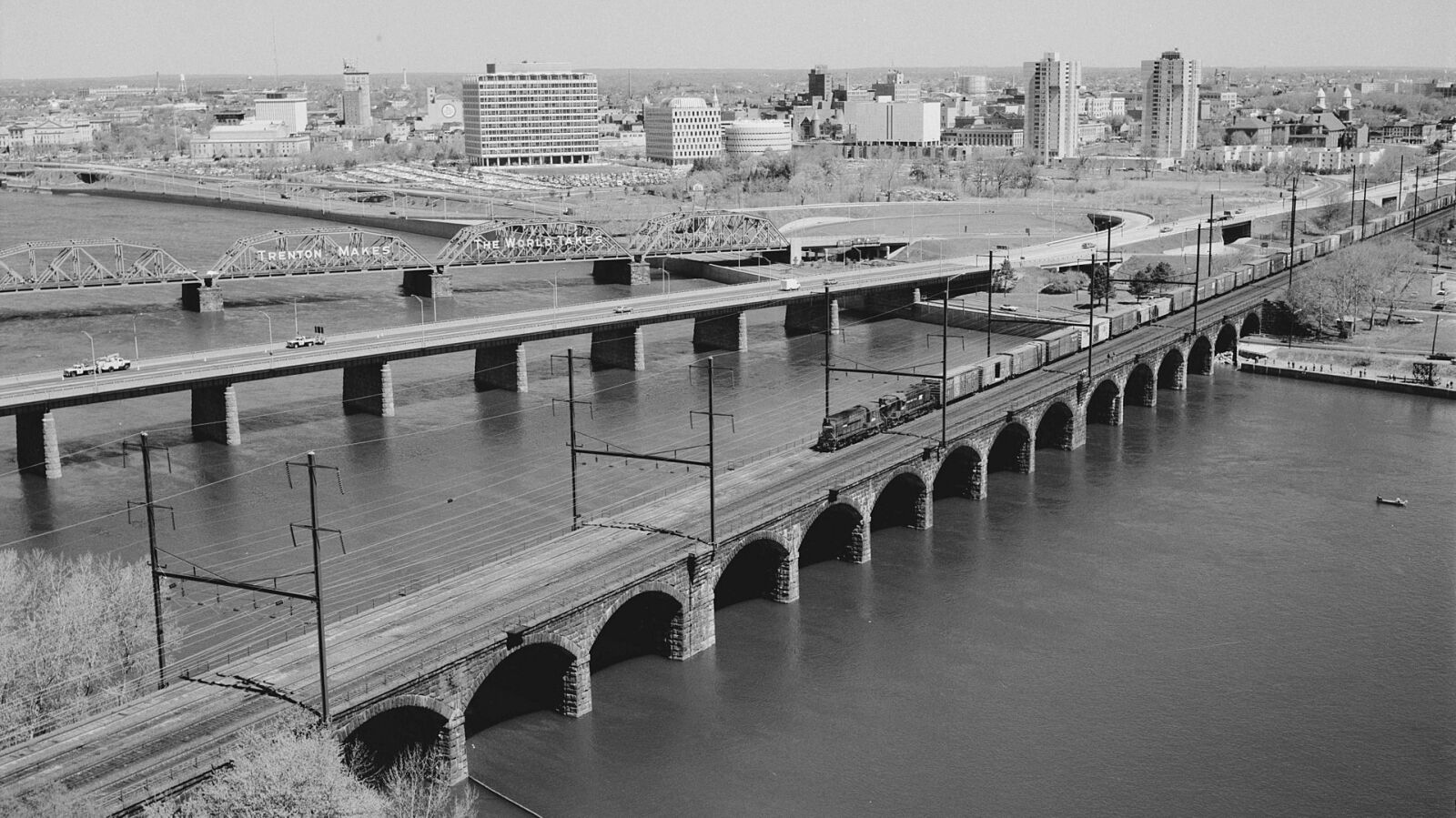
     In the above image (if you click on it it gets larger) from a map found on World Maps Online drawn in 1900 we can see Cooper's factory, which had by then changed names or hands (I didn't research that further) in the upper left of the image. What I find that is cool is how different the scene looks today. The bridge to the far left is the Calhoun Street Bridge, and to the right the Trenton-Morrisville Bridge, aka The Trenton Makes Bridge. For those of us that crawl around down there it is interesting to see the island closest to the Morrisville, PA side. And up on top, on the Trenton side, how large the island is there, which was once part of Stacy Park. It's still there but smaller. Through the years as waterfront development changed due to de-industriualization and notable storms, like the massive 1955 flood, and what changes became of the banks of the Delaware River on both sides. On the PA side, in 1936, a levee was created to reduce flooding in the town of Morrsiville, specifically for a section

known as "The Island", because as we can see, there was an island there. If you look at the map you can see Central, and maybe Park Avenue, just above the Trenton Makes Bridge. Those streets are still there today. So, was the river and island "removed", or filled in when they did the levee construction in 1936 which changed, or ruined, "The Island" neighborhood? One last thing, looking at a Google Map view you can almost see where the river was "cut" off and re-directed when the levee was built.  The filled in section is now Williamson Park, which the town is under talks to re-develop into a condo/mini-town. 


    I think I have actually walked on a section of the old Island. Falling between the Trenton MNakes Bridge and the Route 1 bridge there is a small bog/stream/nastiness, that I believe was where the river "came back in", after passing between the Morrisvile mainland and "The Island". Cool shit there. But back to Cooper. 

     Cooper would go on to produce the first I-beams in the United States and they were the go-to structural members for many of the historical large buildings in the Northeast. First, a modifed rail road track known as the "bulb T" and then a more true representative of classic i-beam design. What is even


more interesting to me is the loose connection between where I fish and my families heritage. I come from a line of union ironworkers. My grandfather was an ironworker. My father is an ironworker. My brother is an ironworker. And yes, I even dabled as an ironworker as a proud member of Camden Local #399 between my 90 day stay at Seton Hall and waiting for the Newark Fire department to call my name. That picture was taken sometime in the late 1980's, maybe around 1988, Wow. And lastly as 


wrap up the "what is that factory" journey, I had to ask myself, "Is there anything left of that now?". Well, there is. while the baseball stadium and offcie buildings have ate up a lot of real estate down on the river where the factory once stood, there are some portions of the buildings left, and in use today. 


     A part of the former factory is owned by the Mercer County Improvement Authority. It is currently leased out as Cooper's Riverfront, and prior to that has been a mix of clubs and restaurants. And that's what I got, well, that's what I found. I am really digging seeing old pictures of the Delware waterfront on both the Trenton and Morrsiville side. Now if I could just find "stuff" related to striped bass fishing, vintage stuff, that would be really cool.


Wednesday, February 1, 2023

02.01.23 There was a nine foot tide back then....


     I found this old photo which originated in the Library of Congress. It was taken in 1912 and shows the Delaware River at Trenton. At first glance I thought it was from the Pennsy side. But if I look at the abutments of the Morrisville-Trenton Train Bridge, which was built in 1902, it appears we are looking downstream based on the water flow. Why would they have current/ice breakers on the back side of abutments in a river? The arial image below shows the bridge looking from above Morrisville, PA. 


    In the postcard below you can see the train bridge on the left side. I tried looking up the factory that is shown mid-image but I haven't been able to locate it. What is interesting is the various 


images show boats in the river on different tides. The upwards of the nine foot tide existed way back in the day and still exists today, of course. The tidal line stops just below the Calhoun Street Bridge. At an 


early glance I was surprised that the Trenton waterfront, in the 1910 and 1920's, wasn't  loaded with factories, bulkheads and barges, but simply sloping banks that lead down to the river. The reason I found these images is because I have been searching for vintage pictures of any literature regarding striped bass in the Delaware River around Trenton. 

    In the late 19th and early 20th century the Delaware River was a major fishery for herring, shad, and sturgeon, the later harvested mostly for caviar. I will find articles and images of the striped bass fishery that occurred before the river went to shit and was almost void of aquatic life by the 1970's. 

     In a paper by Gerald Kaufman titled, The Delaware River Revival: Four centuries of Historic water Quality Change from henry Hudson to Benjamin Franklin to JFK, he refers to an earlier study and paper done by ichthyologist M.E. Crittendon who concluded by 1971that "gross pollution of tidal freshwater had extirpated the striped bass from its historical chief spawning and nursery areas in the Delaware River".


There is so much more to striped bass than catching them. I am in love with a fish.